Read real appliance labels
Model wattages are illustrative. Measure demand when possible and account for startup surges and cycling loads.
From everyday appliances to outage backup and solar possibilities, bring your household's electricity needs into focus.
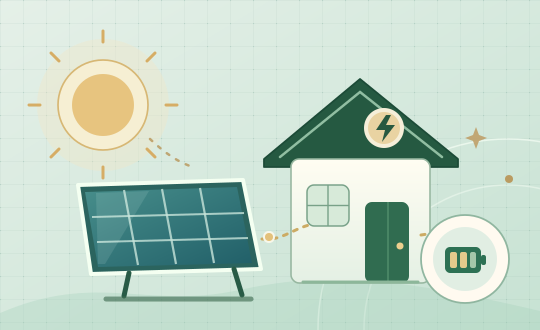
TaqaWise is a practical worksheet, not a product catalogue. Enter your appliances, choose what truly matters during an outage, then explore how assumptions change the results.
Move through four steps and adjust your assumptions at any time.
Add appliances and enter their rated power and daily operating hours. For cycling appliances, estimate equivalent active hours using measured data where possible.
A visual breakdown based on your entered hours and wattages.
Choose the essentials in the appliance list. Explore how long a battery might support those loads if they ran continuously at their entered wattages.
Illustrative capacities, not verified Sudan market stock. Age, heat, battery condition, chemistry and inverter losses can substantially reduce usable energy.
A comparison of continuous rated loads, not a prediction of actual appliance duty cycles or safe operating limits.
Estimate a preliminary PV array power from daily energy, peak-sun-hours and a performance factor. This is not a site or equipment design.
Review the assumptions, compare needs and export a draft for a qualified local installer or energy adviser to examine.
Share only non-identifying details. Never publish water-point locations, movement times or volunteer identities.
This draft is a learning aid. It is not a professional solar system design, electrical certification or SIRAI endorsement.
Electricity is not just arithmetic. Decisions about equipment, wiring, charging and household safety require qualified local expertise.
Model wattages are illustrative. Measure demand when possible and account for startup surges and cycling loads.
Do not build or modify battery packs using this calculator. Battery chemistry, protection, ventilation, compatibility and installation require appropriate guidance.
Use location-specific weather and seasonal data; understand shading and daily operating patterns before purchasing equipment.
Consider medical and accessibility needs, essential lighting, communications and the consequences of power loss. Do not assume a calculated runtime is guaranteed.
For a more detailed grid-connected PV energy model, explore NLR PVWatts. It still cannot replace local design, especially for off-grid backup systems.
Explore PVWatts ↗TaqaWise is an early educational planning tool, free to use and not yet field validated by SIRAI.
Found a problem, a confusing instruction, or a better approach? Tell SIRAI.